

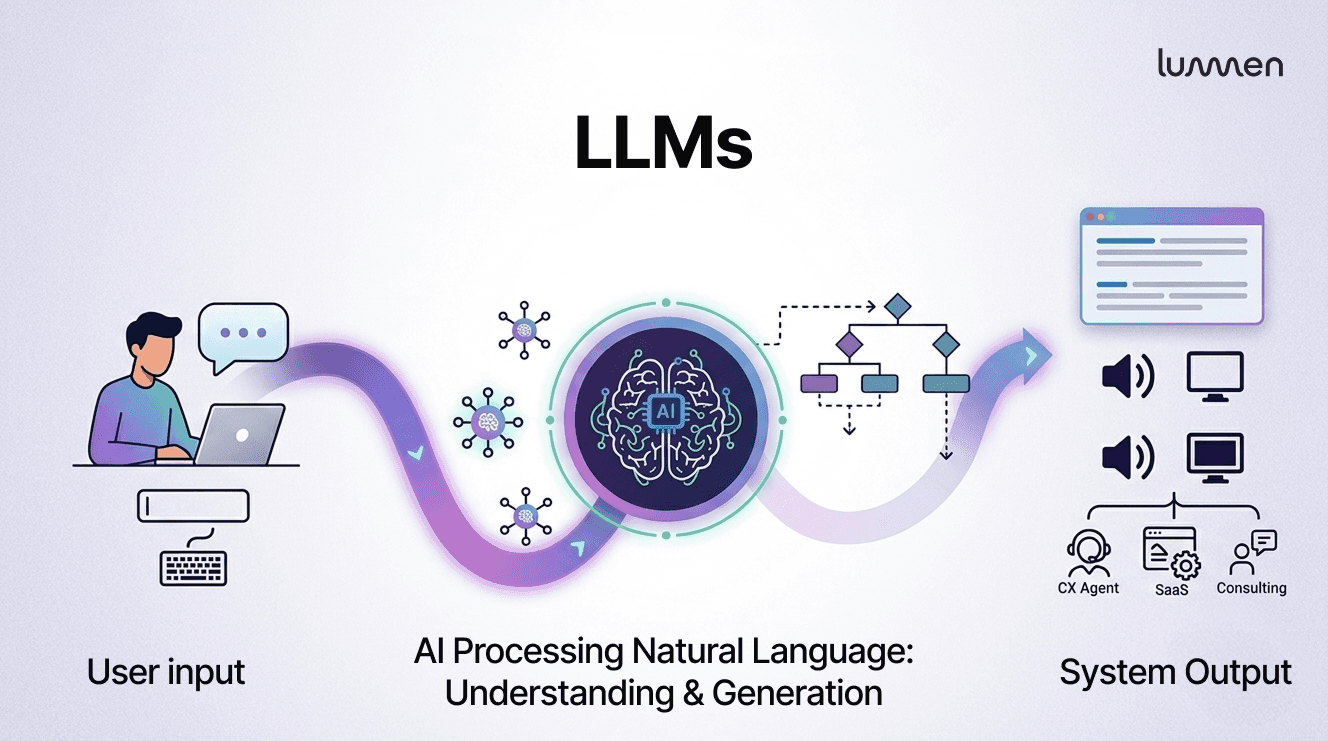
In simple terms, an LLM (Large Language Model) is an AI model trained on massive amounts of text (and sometimes images, audio, and other data) that can understand, generate, and transform language in ways that feel remarkably human.
For businesses, startups, and SMBs, LLMs are quickly becoming powerful engines for growth, efficiency, and competitive advantage. They're not just another technology trend—they're changing how organizations operate, communicate, and make decisions.
In this article, we'll explore what LLMs do, where they create value, and how they can become a strategic asset for your business.
What Do LLMs Actually Do?
LLMs enable capabilities that, until recently, seemed uniquely human:
Summarizing lengthy documents and extracting key insights
Generating content with the right tone, context, and structure—from product descriptions to blog posts
Understanding questions in natural language and providing relevant answers, powering chatbots, internal assistants, and support systems
Analyzing unstructured data such as customer feedback, reviews, and social media conversations to uncover actionable insights
Think of an LLM as an intelligent collaborator that helps your team work faster, make better decisions, and focus on higher-value activities.
Where Can You Use LLMs to Drive Growth?
Let's look at some practical applications for businesses looking to scale.
Content Marketing
LLMs can help generate blog articles, social media variations, email drafts, and personalized messaging for different audiences.
The result? More consistent content production, less time spent on repetitive tasks, and more opportunities to engage customers.
Customer Support
AI-powered assistants can handle common inquiries, freeing your team to focus on complex cases that require human judgment and empathy.
This improves response times while creating a better customer experience.
Internal Knowledge Management
Most companies struggle with information scattered across documents, folders, and systems.
LLMs can act as an intelligent search layer over your organization's knowledge, helping employees quickly find policies, procedures, and answers without wasting time.
Personalized Sales and Outreach
Using customer data and business context, LLMs can generate tailored messages, support lead qualification, and help sales teams communicate more effectively.
The outcome is often better conversion rates and more relevant customer interactions.
Operational Optimization
LLMs can analyze large volumes of text-based information—from product reviews to customer feedback—to identify trends, uncover issues, and generate recommendations.
This transforms raw information into strategic insights.
The common thread across all these use cases isn't just efficiency. It's giving teams more time to focus on decisions, creativity, and growth.
How to Get Started Without Overcomplicating Things
Successful AI adoption rarely starts with massive transformation projects.
Instead, start with a clear and practical use case.
1. Define a Specific Goal
For example:
"I want a chatbot to handle 70% of frequently asked questions."
"I want to publish four AI-assisted blog posts per month."
The more specific the objective, the easier it becomes to measure success.
2. Evaluate Your Business Context
LLMs perform significantly better when they're provided with relevant information about your company, products, services, processes, and brand voice.
Context matters.
3. Choose the Right Tool
You don't need to build your own AI model from scratch.
Today, businesses can leverage existing LLM APIs, AI platforms, and specialized solutions that dramatically reduce implementation time and cost.
4. Keep Humans in the Loop
AI should enhance your team, not replace it.
People still play a critical role in validating outputs, providing judgment, and ensuring quality.
The best results come from combining human expertise with AI capabilities.
5. Measure Impact
Track metrics that matter:
Time saved
Customer satisfaction
Conversion rates
Content production volume
Operational efficiency
Use the data to improve and refine your approach over time.
6. Scale Gradually
Start with a low-risk pilot.
Learn what works.
Then expand successful use cases into other areas of the business.
Risks and Considerations
Like any powerful technology, LLMs require thoughtful implementation.
Output Quality
AI can make mistakes, generate inaccurate information, or occasionally "hallucinate."
Human review remains essential, especially when accuracy matters.
Data Privacy
If you're working with internal or sensitive information, make sure you're using secure systems and following appropriate privacy and compliance practices.
Brand Consistency
AI-generated content should still sound like your company.
Without proper guidance, automated content can feel generic or inconsistent with your brand.
Realistic Expectations
AI is powerful, but it isn't magic.
Long-term success comes from combining technology, strategy, processes, and organizational change.
Why LLMs Can Be a Competitive Advantage
When implemented thoughtfully, LLMs create sustainable business value.
They help organizations:
Move faster than competitors
Free up time for innovation and strategic work
Deliver personalization at scale
Turn scattered information into actionable decisions
Improve efficiency without sacrificing quality
Most importantly, they allow teams to focus on what humans do best: creativity, judgment, relationship-building, and problem-solving.
LLMs are no longer experimental technology reserved for large enterprises. They're increasingly accessible to startups, SMBs, nonprofits, and organizations of all sizes.
The key is to view them not as replacements for people, but as intelligent collaborators.
Start with a clear use case. Integrate them thoughtfully. Measure outcomes. Learn and improve.
Done right, the result isn't simply automation. It's transformation.
Transformation of how your business operates, how your team works, and how you create value for customers. Contact us to start implementing LLM's in your enterprise's system and scale it.


Let’s keep in touch.
Discover more about AI latest trends. Follow us on Linkedin and Instagram.


